Single-photon detection & counting
Single-photon experiments and counting measurements
Optical input: spectral range, coupling and incident-light conditions.
Selection & deliverablesSingle-photon and low-light detection, supported by optical acquisition electronics, counting, synchronization, instrument control and application software.
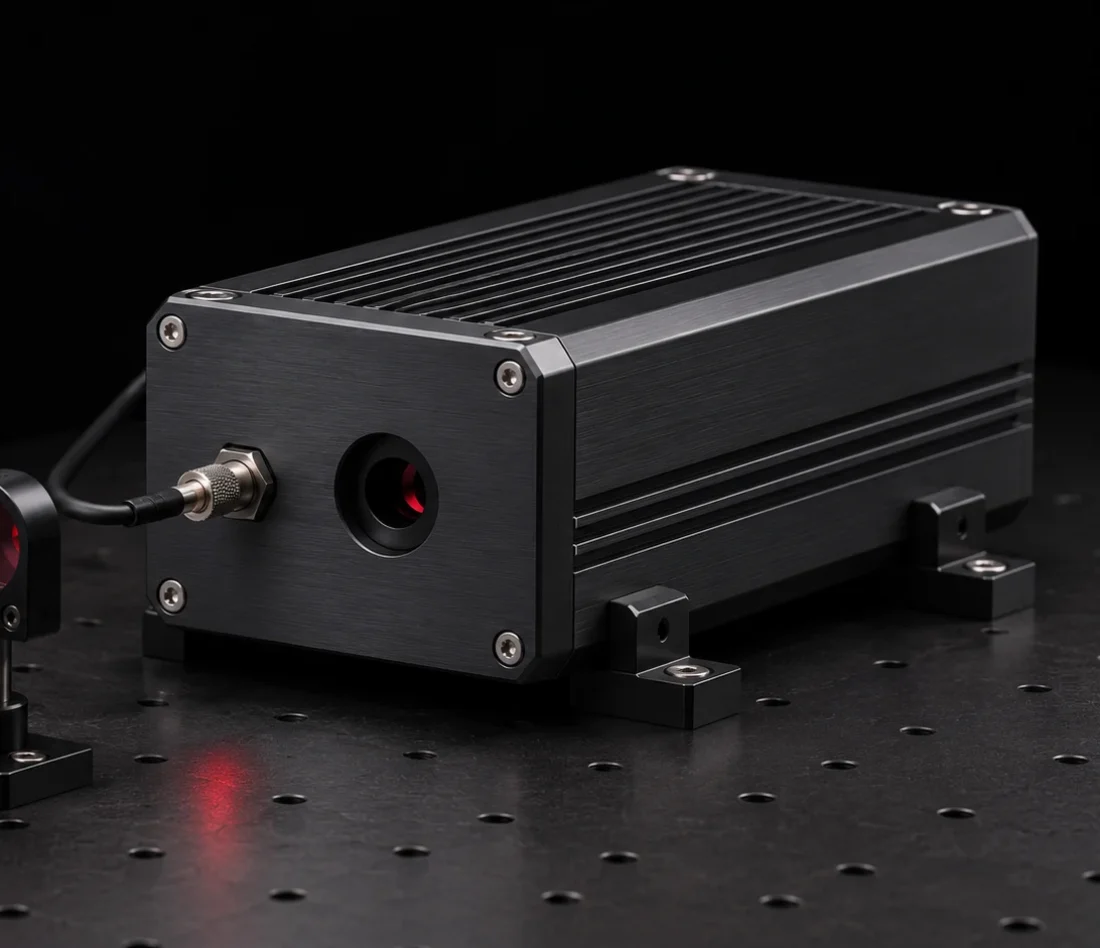
Define the optical signal, experiment and measurement goal, then align detection, readout, synchronization and instrument software.
Spectrum, detection method and input conditions
Readout, counting, synchronization and drivers
Configuration, visualization and experiment records
Detector integration, photon counting and signal readout, selected around spectral, counting and system interface requirements.
Low-light acquisition, photoelectric conversion and measurement-chain development.
Detector bias and drive electronics, analog front ends, acquisition interfaces and signal-chain integration.
Pulse counting, trigger and synchronization interfaces, and external instrument connectivity.
Desktop controls, configuration, acquisition records, visualization, exports and experimental workflows.
Optical, electronic and software integration for research, optoelectronic testing and detection equipment.
Single-photon experiments and counting measurements
Optical input: spectral range, coupling and incident-light conditions.
Selection & deliverablesAcquisition chains from detector to host
Signals: amplitude, bandwidth, noise and input format.
Selection & deliverablesHost applications and operator interfaces
Device interfaces: protocols, SDKs, commands and connection methods.
Selection & deliverablesShare your use case, existing conditions and expected outcome. Define the product and development scope together.